Rewiring Cancer

Triggering Cancer to Destroy Itself.

Cancer is driven by proteins that promote tumor growth and survival. Most targeted therapies are designed to inhibit or degrade these proteins. But cancer can adapt, activate alternative pathways and ultimately develop resistance.

Shenandoah Therapeutics is taking a fundamentally different approach.

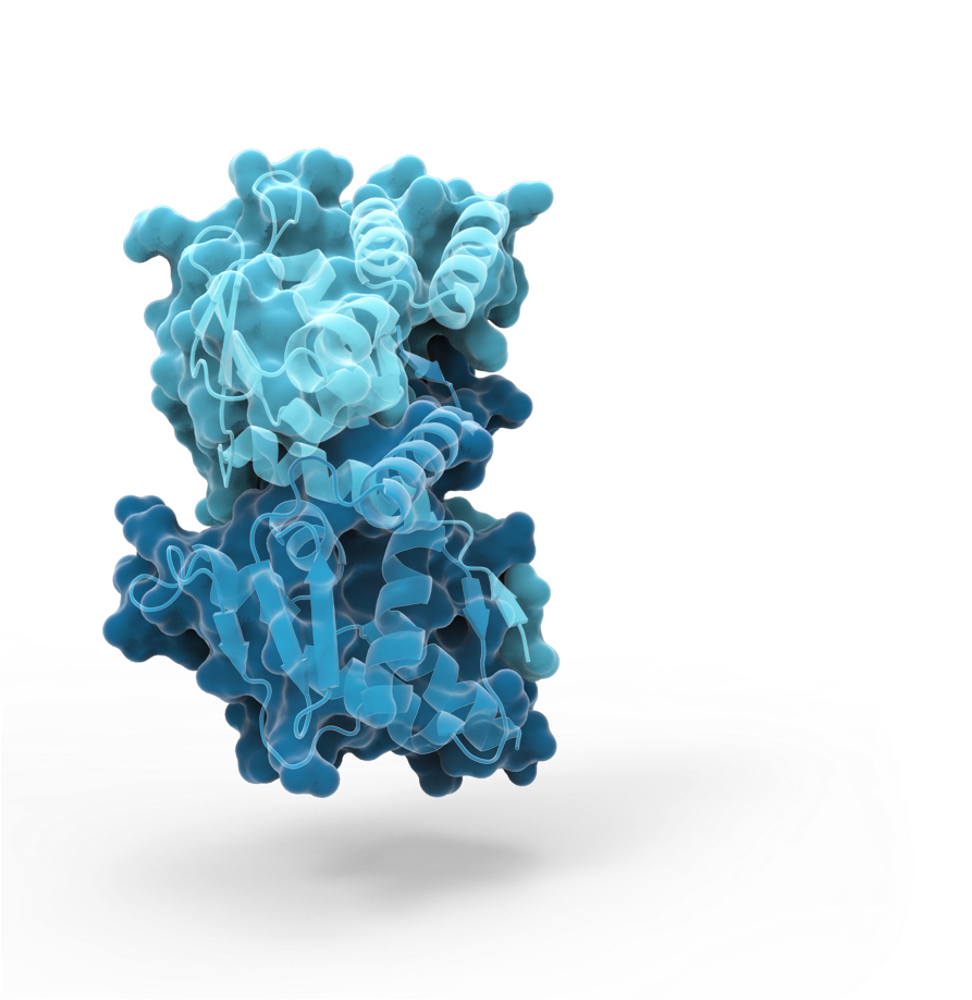
Our Transcriptional and Epigenetic Chemical Inducers of Proximity (TCIP) platform is designed to rewire cancer-driving proteins and convert them into activators of programmed cell death. Instead of simply shutting down a cancer driver, TCIPs redirect it to trigger the cancer cell’s own self-destruct machinery.

Featured Publications

A new therapeutic logic

Rewiring cancer drivers to directly activate programmed cell death

Oncogenic Driver

CIP

Cell Death Regulator

Cell Death

01

Selective

Target cancer cells through defined cancer drivers. The mutated driver is the unique feature of the cancer cell.

02

Self-Destruct Switch

Utilize the cancer cell’s natural programmed cell death pathway via a dominant gain-of-function strategy.

03

Potent

Sub-stoichiometric pharmacology: rewire <10% of target protein to kill >99% of cancer cells.

Shenandoah’s TCIP rewires oncogenic drivers to bypass resistance and directly trigger the cell’s natural self-destruct machinery.

Lead Program

Rewiring BCL6 to trigger cancer cell death

  • BCL6 is a master inhibitor of cancer cell death.
  • BCL6 epigenetically represses cell death genes such as TP53, NOXA, BIM, FOXO3 and others.
  • Non-coding mutations and amplifications of the BCL6 gene increase BCL6 expression in lymphoma and other malignancies, promoting proliferation and survival.
  • BCL6 is the driving oncogene.
TP53NOXABIMFOXO3

The Platform

From oncogenic driver to tumor cell death

The Shenandoah Transcriptional and Epigenetic CIP (TCIP) Platform

1

Target Biology

Coupling cancer driver with optimal cell death mechanism

  • Bioinformatics (AI/ML enabled)
  • Cancer Driver Mapping
  • Death Circuitry Profiling
  • Genetically Engineered Models
2

Drug Discovery

Chemically induced proximity leverages event-driven pharmacology

  • Structure Based TCIP Design (AI/ML enabled)
  • Induced Proximity Library
  • Direct-to-biology to minimize timelines
3

Clinical Outcomes

Translational science and expanding therapeutic opportunity

  • Transcriptional and Epigenetic Profiling
  • Protein Expression Profiling
  • Indication Expansion across shared Drivers

Built by proven drug hunters and proximity pioneers

$10B+

in value created for investors

Four

IPOs

Multiple

life-changing therapies advanced to clinical development and approvals

Leadership
  • Steve Worland, Ph.D.

    CEO

    Dr. Worland joined Shenandoah as CEO in 2026, bringing more than 30 years of
    biotechnology leadership, drug discovery and development experience. Most recently,
    he served as Chief Executive Officer of Numerion Labs. He previously co-founded
    eFFECTOR Therapeutics and served as its President, Chief Executive Officer and
    Board Member, leading the oncology company from inception through its public listing in
    2021 while advancing two product candidates from target concept into Phase 2 clinical
    development. During his tenure, eFFECTOR raised more than $250 million in private
    and public equity financing and established a major research collaboration with Pfizer.
    Prior to eFFECTOR, Dr. Worland served as President and Chief Executive Officer of
    Anadys Pharmaceuticals, where he led the company through its $230 million acquisition
    by Roche. He has also held senior leadership roles spanning research, development
    and corporate strategy across the biotechnology industry and has made scientific
    contributions to several approved products and clinical candidates, including Paxlovid®,
    Inlyta®, zotatifin, tomivosertib and setrobuvir. He has served as an independent director
    for public and private companies, including GenMark Diagnostics, Tracon
    Pharmaceuticals and Blacksmith Medicines.

    Dr. Worland earned a Ph.D. in Chemistry from the University of California, Berkeley, and
    a B.S. with Highest Honors in Biological Chemistry from the University of Michigan. He
    completed a postdoctoral fellowship in molecular biology at Harvard University as an
    NIH fellow.

    Steve Worland, Ph.D.

    CEO
  • Mark Stepka

    CFO

    Mark Stepka is Chief Financial Officer of Shenandoah Therapeutics Inc. He also advises Blind Insight, Inc., a data encryption company, and previously served on the board of Global Electric Transport, a Philippines-based municipal transportation company.

    Before joining Shenandoah, Mr. Stepka spent his career at public accounting firms, beginning at Price Waterhouse. He focused on the financing and sale of privately held companies, advising on transaction structures and multigenerational wealth preservation strategies for transactions valued at up to $3 billion. His expertise in finance and valuation led to his retention as an expert witness in federal and state courts on economic damages and business valuation matters for multinational and local businesses.

    Mr. Stepka holds the Certified Valuation Analyst (CVA) designation and previously held CPA licenses in Ohio and California, both now in retired status. He is a past president of the Cleveland and San Diego chapters of the Association for Corporate Growth, an international mergers and acquisitions organization. He received a B.A. in business, with a minor in psychology, from Baldwin-Wallace University.

    Mark Stepka

    CFO
  • Isabella Graef, MD

    Co-Founder and CSO

    Dr. Isabella Graef co-founded Shenandoah Therapeutics in December 2022 with Drs. Crabtree and Gray and served as founding CEO until September 2026. She built the company’s scientific and operational teams, raised a $21.5 million seed round, established its transcriptional/epigenetic chemical inducer of proximity (TCIP) platform, and advanced its first TCIP oncology program toward IND-enabling studies. As CSO, she leads the company’s scientific strategy and TCIP platform development.

    Previously, Dr. Graef was on the faculty of Stanford University School of Medicine, where her laboratory developed chemical approaches to protein-misfolding diseases. She co-invented acoramidis (AG10), a transthyretin stabilizer inspired by a naturally protective mutation, and co-founded Eidos Therapeutics to bring the discovery into clinical development. The molecule discovered in her laboratory reached regulatory approval without structural modification and is marketed as Attruby® in the United States and Beyonttra® in Europe and Japan.

    Dr. Graef began studying chemical inducers of proximity (CIPs) as a Stanford postdoctoral fellow in 1994. She later demonstrated that bifunctional molecules could recruit endogenous chaperones to inhibit pathogenic protein-protein interactions, establishing that induced proximity can be harnessed to inhibit, as well as activate, biological functions. This longstanding research interest now underpins Shenandoah’s TCIP platform. Her work also elucidated developmental roles of calcineurin–NFAT signaling, with publications in Nature, Cell, Science, and Neuron. She graduated with highest honors from the University of Vienna Medical School, trained in dermatology and immunology, and earned an M.S. from University of California, Berkeley as a Fulbright Fellow. She remains affiliated with Stanford’s SPARK program.

    Isabella Graef, MD

    Co-Founder and CSO
  • Sushant Malhotra, Ph.D.

    SVP, Drug Discovery

    Dr. Sushant Malhotra is a distinguished medicinal chemist and drug discovery expert with over 22 years of experience in the pharmaceutical and biotech industries. He specializes in developing breakthrough therapies for patients, with extensive expertise in both non-covalent and covalent drug discovery, as well as induced proximity mechanisms (including molecular glues, PROTACs, and TCIPs) and CNS drug discovery. Additionally, he brings valuable CMC experience from his tenure as a process chemist at Genentech.

    Over the course of his career, Dr. Malhotra has been instrumental in the invention and development of multiple clinical candidates, successfully advancing several from Phase 1 to Phase 3 trials. He holds 19 patents and has authored 29 publications. Dr. Malhotra earned his Ph.D. in Organic Chemistry from Stanford University under Professor Barry M. Trost and his B.A. in Chemistry from Grinnell College. His academic foundation paved the way for leadership roles at renowned organizations such as Genentech, Eli Lilly, Frontier Medicines, and Lyterian Therapeutics.

    He currently serves as Senior Vice President of Drug Discovery at Shenandoah Therapeutics. Dr. Malhotra’s career is marked by significant achievements in oncology, neuroscience, and immunology drug discovery, where he has advanced eight molecules to clinical trials. As a sought-after speaker and mentor, he actively engages with the scientific community through seminars, collaborations, and advisory roles. Driven by a passion for innovation, Dr. Malhotra is committed to advancing the field of drug discovery chemistry and improving patient outcomes.

    Sushant Malhotra, Ph.D.

    SVP, Drug Discovery

Board

  • Nathanael Gray, Ph.D.

    Co-Founder and Board Director

    Dr. Nathanael S. Gray is a co-founder and member of the Board of Directors of Shenandoah Therapeutics and the Krishnan-Shah Family Professor of Chemical and Systems Biology at Stanford University. He co-founded Shenandoah Therapeutics with Dr. Gerald Crabtree and Dr. Isabella Graef to bring gain-of-function strategies to reprogram transcriptional regulators such as Bcl6.

    After completing his Ph.D., Dr. Gray was recruited to the Genomics Institute of the Novartis Research Foundation (GNF) in San Diego, California. In 2006, Dr. Gray returned to academia as a faculty member at the Dana Farber Cancer Institute and Harvard Medical School in Boston. There, he established a discovery chemistry group that focuses on developing first-in-class inhibitors for newly emerging biological targets and advanced compounds targeting EGFR, BRD9, JAK2, CDK7, Pi3K and PIP4K2c into clinical development. In 2021, Dr. Gray joined Stanford University where he has joined the Stanford Cancer Institute and Sarafan ChEM-H to spur the development of prototype drugs.

    Dr. Gray has also been involved in establishing several biotechnology companies to advance projects from the lab into the commercial sector including: Gatekeeper (acquired), Petra (acquired), Syros (IPO), C4 (IPO), Matchpoint, Larkspur, and Lighthorse.

    Dr. Gray is an inventor of more than 150 published patents and more than 500 peer-reviewed publications. These contributions have been recognized through numerous awards including the National Science Foundation’s Career award in 2007, the Damon Runyon Foundation Innovator award in 2008, the American Association for Cancer Research for Team Science in 2010 and for Outstanding Achievement in 2011, the American Chemical Society award for Biological Chemistry in 2011, the Nancy Lurie Marks endowed professorship in 2015, the Paul Marks Prize in 2019, and the AACR Chemistry Award in 2024.

    Nathanael Gray, Ph.D.

    Co-Founder and Board Director
  • James Edwards, Ph.D.

    Board Director

    Jim joined Samsara BioCapital as a Venture Partner in Fall, 2022 and has over 28 years of experience in drug discovery across multiple therapeutic disciplines.

    Prior to joining Samsara, Jim spent 22 years at Janssen Research & Development in roles of increasing responsibility. Most recently, he was Vice President and Global Head, In Silico Discovery & External Innovation, leading a multi-disciplinary group of computational & data scientists providing predictive and design tools across all modalities within the Therapeutics Discovery organization at Janssen. Prior to this he was Vice President & US Regional Head, Discovery Chemistry, leading drug discovery teams at multiple sites. These teams were responsible for the design and synthesis of small molecule drug candidates working with partners across all six Therapeutic Areas within JRD and delivered clinical-stage small molecule drug candidates against targets ranging from GPCRs & kinases to cytokines & cytokine receptors. From 1999-2014, Jim led various Immunology medicinal chemistry groups at J&J/Janssen which progressed clinical-stage molecules against novel first-in-class targets such as cathepsin S, histamine H4, and LTA4H. Jim began his career in the pharmaceutical industry at Ligand Pharmaceuticals, working on non-steroidal AR & PR modulators.

    Jim received his Ph.D. from the University of Illinois, Urbana-Champaign, working with Professor Scott Denmark, and his BS from Harvey Mudd College in Claremont, CA. He also performed post-doctoral studies with Professor Lanny Liebeskind at Emory University.

    James Edwards, Ph.D.

    Board Director
  • Wendy Young, Ph.D.

    Board Director

    Dr. Wendy Young is a biotechnology, pharmaceutical, and life science executive with more than 30 years of experience in the discovery and development of new medicines and research platforms. She currently serves as a board member and scientific advisor at several public and private biotech companies and is a senior advisor at GV (Google Ventures). Previously, Wendy was Senior Vice President of Drug Discovery at Genentech, where she helped build and later led the small molecule drug discovery organization.

    During her tenure, more than 25 clinical candidates were discovered across multiple therapeutic areas and nominated for development. These include inavolisib, now FDA-approved as Itovebi; fenebrutinib and giredestrant, both currently under FDA review; and divarasib, currently in pivotal trials. Wendy was the discovery team leader and is a co-inventor of fenebrutinib, a potential first-in-class oral treatment for both relapsing and primary progressive multiple sclerosis. Earlier in her career, she held leadership roles at Scios, a Johnson & Johnson company, and at Celera Genomics.

    Driven by a strong passion for innovative research and basic science, Wendy is named as an inventor or author on more than 70 patents and publications. Her leadership and scientific achievements have been widely recognized. She was inducted into the MEDI Hall of Fame in 2024, received the Earle B. Barnes Award for Chemical Leadership in 2020, was named one of Endpoints News’ Top 20 Women in Biopharma in 2019, and was inducted as an ACS Fellow in 2018. Wendy earned her doctorate in chemistry from Princeton University and was an American Cancer Society Postdoctoral Research Fellow at Memorial Sloan Kettering Cancer Center.

    Wendy Young, Ph.D.

    Board Director
  • Gary Yeung, MBA, CFA

    Board Director

    Gary Yeung is the Founder and Managing Partner of YK Bioventures, bringing over 25 years of life sciences investment and executive leadership experience. Throughout his career, Gary has raised over $800 million in capital and invested in more than 25 private life sciences companies.

    As a senior executive, he played key leadership roles in building and scaling Guardant Health (NASDAQ: GH), Annexon Biosciences (NASDAQ: ANNX), and Erasca (NASDAQ: ERAS). Previously, Gary spent 12 years at Genentech leading operational teams that filed 42 INDs and launched multiple FDA-approved therapies. He began his career at McKinsey & Company and GE.

    Gary holds an MBA from UCLA, a B.S. in Chemical Engineering from UC Berkeley, and is a CFA charterholder.

    Gary Yeung, MBA, CFA

    Board Director
  • Gerald Crabtree, MD

    Founder and Board Observer

    Dr. Gerald Crabtree is the David Korn Professor at Stanford University. He is an Investigator of the Howard Hughes Medical Institute since 1987.

    In 1993, Drs. Crabtree and Stuart Schreiber pioneered the concept of chemically induced proximity (CIP), developing heterobifunctional molecules to control biologic processes such as signaling and transcription. Building on this foundational discovery, he conceived TCIPs, small molecules that rewire cancer drivers to activate cell-death programs. With Dr. Nathanael Gray he led TCIP development reported in (Nature (2023), Science (2024), and Cell (2026). He co-founded Shenandoah Therapeutics with Drs. Gray and Graef to advance TCIPs toward the clinic.

    Dr. Crabtree defined the signaling pathway by which foreign antigens activate the immune response and the mechanism of action of the immunosuppressants Cyclosporin A and FK506. His laboratory showed that this pathway is essential to the development of the heart, immune, skeletal, and nervous systems. He also pioneered chromatin biology through the discovery of mammalian BAF remodeling complexes and neuron-specific nBAF, revealing their roles in development, neurological disorders, and cancer.

    He is a member of the National Academy of Sciences and a Fellow of the American Association for the Advancement of Science. Other honors include the NIH Director’s Award, the NIH Merit Award, Stanford’s Outstanding Inventor award, a Thomson Scientific Laureate in Chemistry (2006), and the NIH Javits Neuroscience Investigator Award.

    Raised in rural West Virginia and the Shenandoah Valley, he earned a B.S. in chemistry and mathematics from West Liberty State College and an M.D. from Temple University. He began his research career at Dartmouth and was a senior investigator at the National Institutes of Health before joining the Stanford faculty in 1985.

    Gerald Crabtree, MD

    Founder and Board Observer

Partner with Shenandoah.

Advancing internal lead TCIPs with a platform built for high-value strategic partnering.

This site is protected by reCAPTCHA and the Google Privacy Policy and Terms of Service apply.